


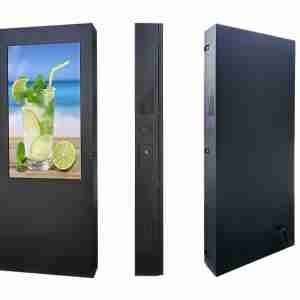
Freestanding Digital Screen Kiosk vs Wall-Mounted Kiosk Display. Choosing the right kiosk form factor is one of the most important decisions in any digital display project. A freestanding digital screen kiosk can create a strong visual presence and work well in open spaces, while a wall-mounted kiosk display is often the better choice when floor space is limited or when you want a clean, integrated look.
The best option depends on your layout, traffic flow, installation conditions, and the role the kiosk plays in your customer journey. In some spaces, the kiosk should stand out as a focal point. In others, it should blend into the environment and keep the area open and uncluttered.
Quick Comparison of Freestanding Digital Screen Kiosk vs Wall-Mounted Kiosk Display at a Glance
If you need a fast answer, the choice usually comes down to space and visibility.
| Factor | Freestanding Digital Screen Kiosk | Wall-Mounted Kiosk Display |
|---|---|---|
| Footprint | Uses floor space | Saves floor space |
| Visibility | Strong focal presence | Eye-level visibility |
| Flexibility | Easier to reposition | Fixed in place |
| Installation | Simpler in open areas | Depends on wall strength and cabling |
| Maintenance | Easier access from multiple sides | Cleaner layout, but wall access matters |
| Best For | Entrances, malls, lobbies, open areas | Corridors, counters, compact spaces |
If you already know your site is tight on space, a wall-mounted option is often the starting point. If you want a screen that becomes part of the environment and draws attention from a distance, a freestanding format usually performs better.
Need help choosing? Contact our team for a recommendation based on your floor plan.
Freestanding Kiosk: Pros and Cons
A freestanding digital screen kiosk is a standalone display that sits on the floor, usually with a stable base for safety. It is widely used in retail, hospitality, healthcare, public venues, and exhibition spaces because it is easy to see and can be placed where people naturally stop or look around.
Pros
-
Strong visual presence in open areas.
-
Easy to reposition when the layout changes.
-
Suitable for branding, wayfinding, promotions, and self-service.
-
Works well when wall mounting is not possible or not desirable.
Cons
-
Takes up floor space.
-
Needs a stable base and enough surrounding clearance.
-
May feel too dominant in small or crowded environments if not planned carefully.
In environments where you want the kiosk to act like a digital landmark, freestanding is often the stronger choice. It gives you more freedom for placement and can create a more premium first impression.
Explore our freestanding digital kiosk solutions if your project needs a high-impact display in an open space.
Wall-Mounted Kiosk Display: Pros and Cons
A wall-mounted kiosk display is fixed to a wall or vertical structure, making it a practical option for compact spaces and fixed service points. It is commonly used where every square foot matters and where the display should remain visible without occupying the floor.
Pros
-
Saves floor space.
-
Keeps walkways clear.
-
Creates a clean, streamlined look.
-
Works well at eye level for quick viewing.
-
Suitable for counters, corridors, clinics, lobbies, and compact retail environments.
Cons
-
Requires a suitable wall for safe mounting.
-
Less flexible if the layout changes later.
-
Installation depends on wall structure, cable routing, and service access.
Wall-mounted units are particularly useful when you want the kiosk to feel built into the space rather than added as a separate object. That can be a big advantage in minimalist interiors or crowded areas where clutter must be avoided.
See our wall-mounted kiosk display options for a space-saving solution in a fixed location.
Space Planning and Traffic Flow Considerations
The best kiosk is not just the one with the right screen size. It is the one that fits naturally into the room without interrupting the way people move through the space. A freestanding kiosk can create a strong stop point in open areas, while a wall-mounted unit can preserve circulation in tighter layouts.
When floor space is limited
Wall-mounted kiosks are usually the better option because they keep the floor clear and help the area feel more open.
When you want a strong first impression
Freestanding kiosks are often more effective because they create presence and attract attention from multiple directions.
When traffic flow matters
Think about how people enter, pause, turn, and leave. A kiosk should support movement rather than block it. In busy spaces, even a few inches of projected footprint can affect comfort and navigation.
When the layout may change later
Freestanding units are usually easier to relocate, which can be useful if your store, lobby, or venue changes over time.
If you are planning a new site or upgrading an existing one, request a layout review before finalising the form factor.
Installation and Maintenance Requirements
Installation is one of the most practical differences between the two formats. A freestanding unit usually needs stable positioning and power access, while a wall-mounted kiosk requires a proper wall structure, correct height alignment, and careful cable management.
Freestanding installation
Freestanding kiosks are often easier to place in open areas and can be repositioned later if the layout changes. That flexibility is one of their biggest advantages, especially in retail, events, and temporary campaign setups.
Wall-mounted installation
Wall-mounted kiosks need a mounting surface that can safely support the unit. They also require thought about service access, power entry, and how the display will be maintained after installation.
Maintenance differences
Freestanding kiosks can be easier to access from multiple sides, which is helpful when you need quick servicing or upgrades. Wall-mounted kiosks, on the other hand, can keep the area cleaner and more organised, though access to the rear or side should still be considered during planning.
Talk to us about installation planning if you want help matching the format to your site conditions.
Which Option Fits Different Industries and Scenarios?
Different industries often favour different kiosk formats based on how the display is used and how much space is available. The same project can call for very different answers depending on whether the priority is brand presence, self-service, wayfinding, or service efficiency.
Retail and shopping malls
Freestanding kiosks are often used for promotions, tenant directories, and product discovery because they work well as visible landmarks in larger shared spaces. Wall-mounted kiosks are useful near service counters, corridor junctions, and compact retail zones.
Quick-service restaurants
Wall-mounted kiosks are often a good fit for compact ordering zones because they keep the service area tidy and open. Freestanding units can work better in larger lobby or queue areas where a stronger display presence is needed.
Healthcare and clinics
Wall-mounted kiosks are commonly used for check-in and patient information because they save space and can be installed at a convenient height. Freestanding kiosks are helpful in larger reception areas where visibility and accessibility matter.
Corporate lobbies and hospitality
Freestanding kiosks are often chosen for visitor management, brand storytelling, and digital concierge experiences. Wall-mounted units can be ideal when space is tight or when the display needs to blend into the environment.
Exhibitions and showrooms
Freestanding kiosks usually work well because they can be placed where visitors naturally pause. Wall-mounted displays are useful when the goal is to add information without taking away from the exhibition floor.
If you want to compare formats by use case, browse our kiosk solutions by industry.
Our Freestanding and Wall-Mounted Digital Kiosk Solutions
We offer both freestanding and wall-mounted digital kiosk options designed for different environments, different footprints, and different customer journeys.
Freestanding models
Freestanding units are a strong fit for open areas, entrances, lobbies, and retail floors where visibility matters most. They can be used for branding, interactive content, wayfinding, and self-service tasks.
Wall-mounted models
Wall-mounted units are ideal for compact installations, corridors, counters, and other fixed locations where preserving floor space is important. They are especially useful when you want a neat, integrated look.
Why choose a manufacturer-led solution
Working directly with a manufacturer makes it easier to match the enclosure, screen size, mounting style, and software requirements to the actual site. That also helps reduce mismatches between design intent and final installation.
If you already know your project location, send us your layout, and we’ll recommend the right form factor.
How to Choose the Right Form Factor for Your Project
The simplest way to decide is to start with space, then move to purpose.
Start with the space
Measure the floor area, check wall structure, review power access, and note any walking routes that must remain open.
Then define the goal
Ask whether the kiosk is mainly for branding, self-service, wayfinding, product discovery, check-in, or service display.
Final decision rule
Choose a freestanding kiosk if presence, flexibility, and visibility matter most.
Choose a wall-mounted kiosk if floor space, compact installation, and a cleaner layout matter most.
In many projects, the right answer becomes obvious once the layout and use case are reviewed together.
Project Checklist Before You Decide
Before ordering, make sure you have the basics clear.
-
What is the main purpose of the kiosk?
-
Is the space open or compact?
-
Will the kiosk need to move later?
-
Is wall mounting structurally possible?
-
How far away will users view the display?
-
Will the kiosk be near a wall, a counter, or an open floor area?
-
Do you need a simple display or an interactive solution?
A short checklist like this prevents costly changes after installation.
Frequently Asked Questions
What is the main difference between freestanding and wall-mounted kiosks?
Freestanding kiosks sit on the floor and are easier to reposition, while wall-mounted kiosks are fixed to a wall and save floor space.
Which option is better for small spaces?
Wall-mounted kiosks are usually better for small spaces because they keep the floor clear and preserve movement.
Are wall-mounted kiosks easier to maintain?
They can be easy to keep visually clean, but maintenance access depends on the installation design.
Can a freestanding kiosk be moved later?
Yes. Freestanding kiosks are generally easier to relocate if your layout changes.
Which option works better for retail and hospitality?
Both can work well. Freestanding units often suit open, high-visibility areas, while wall-mounted units are better for compact or fixed service points.
If you need help choosing the right format, contact our team for a tailored recommendation.

 English
  Arabic
  Spanish