


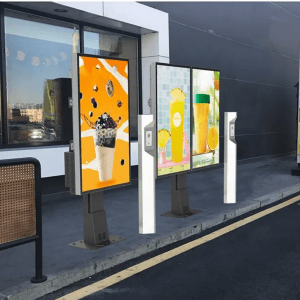
Choosing between Android and Windows is one of the most important decisions in a digital kiosk display project. The operating system affects cost, performance, app compatibility, maintenance, and the type of user experience your kiosk can deliver.
At LCDSLD, Digital Kiosk Displays OS selection is treated as part of the full kiosk solution, not just a software preference. The right platform depends on the project’s software stack, deployment scale, peripheral needs, and long-term support model.
Why Digital Kiosk Displays OS Choice Matters
A kiosk display may look identical on the outside, but the operating system behind it can change how the entire solution works. Android and Windows differ in architecture, app deployment, device management, and integration flexibility.
That means Digital Kiosk Displays OS choice can influence whether a kiosk is easy to roll out, easy to maintain, and easy for users to interact with. For buyers planning a single-site or a multi-location rollout, selecting the wrong Digital Kiosk Displays OS can create unnecessary cost and complexity.
Android Kiosk Displays
Android is widely used in modern kiosk projects because it offers a familiar touch-first experience and a relatively simple deployment path. In many cases, it is the most practical option for digital signage, retail interaction, and streamlined self-service.
What Android offers
Android kiosks are typically efficient, compact, and well-suited to kiosk mode applications. They work especially well when the interface is designed around touch, simple navigation, and cloud-managed content.
Main advantages
Android is attractive because it often provides:
-
Lower hardware and licensing costs.
-
Easier deployment for standardised applications.
-
A familiar mobile-style experience for users.
-
Strong fit for digital signage and lightweight interactive workflows.
For many projects, especially those focused on speed and scale, Android offers a strong balance of simplicity and value.
Best use cases
Android kiosk displays are often the best fit for:
-
Retail kiosks.
-
Hospitality check-in.
-
Promotional screens.
-
Directory and wayfinding units.
-
Standard self-service applications.
-
Content-driven digital signage.
In these settings, the kiosk does not need heavy local processing. It needs reliability, easy updates, and a user-friendly interface.
Limitations
Android is not always the best choice for complex local processing, legacy enterprise systems, or specialised peripherals. Some projects also require deeper control than a lightweight Android platform is designed to provide.
That is why Android works best when the software requirements are clear and the workflow is relatively streamlined.
Windows Kiosk Displays
Windows is often preferred when the kiosk needs stronger enterprise compatibility, broader software support, or deeper integration with existing systems. It is a strong option for more complex deployments where flexibility matters more than simplicity.
What Windows offers
Windows kiosk systems are built around a PC-style architecture. That makes them a natural choice when the project requires traditional desktop-style software, advanced local processing, or compatibility with established business systems.
Main advantages
Windows is often the right choice because it provides:
-
Broad software compatibility.
-
Strong support for enterprise workflows.
-
Better fit for complex applications.
-
Easier integration with external devices and legacy systems.
For buyers with demanding software environments, Windows can offer the control and compatibility they need.
Best use cases
Windows kiosk displays are often suitable for:
-
Corporate workflows.
-
Complex self-service systems.
-
POS integration.
-
Industrial or utility applications.
-
Legacy software environments.
-
Kiosks that require stronger local processing.
These projects often involve more than content playback, so a PC-based operating system becomes more valuable.
Limitations
Windows usually comes with a higher upfront cost, greater system complexity, and more administrative overhead. Licensing, updates, and hardware requirements can also increase the total cost of ownership.
For simpler kiosk projects, that extra complexity may not be worth it.
Android vs Windows Side-by-Side
The best way to compare Android and Windows is to look at what each one does best.
| Feature | Android | Windows |
|---|---|---|
| Upfront cost | Usually lower | Usually higher |
| Ease of deployment | Easier for simple rollouts | More complex |
| Software compatibility | Best for Android-based or browser-based apps | Best for broad enterprise and desktop software |
| Hardware/peripheral support | Good for standard setups | Strong for complex integrations |
| User experience | Touch-first and familiar | Flexible and enterprise-oriented |
| Maintenance | Often simpler | Often more involved |
| Best for | Digital signage, retail, hospitality, standard self-service | Enterprise workflows, POS, legacy integrations, complex systems |
This table is useful because the “best” OS depends on the project goal, not on a universal rule. In many real deployments, Android and Windows are both correct answers for different kinds of applications.
How to Choose the Right OS
The right operating system should be selected from the actual use case outward.
Choose based on software requirements
If your application is built for Android or browser-based use, Android is often the more efficient choice. If your workflow depends on desktop software, legacy programs, or Windows-native integration, Windows is usually the safer path.
Choose based on deployment scale
For multi-site rollouts, ease of provisioning and consistency matter a lot. Android can be very efficient for standardised deployments, while Windows may be better when enterprise IT controls are already built around PC infrastructure.
Choose based on peripheral needs
Some kiosks need printers, scanners, card readers, or other connected hardware. If the device ecosystem is simple, Android may be enough. If the peripheral stack is more complex, Windows can offer more flexibility.
Choose based on budget and lifecycle cost
A lower upfront cost does not always mean a lower total cost. You should also account for licensing, maintenance, update management, and support requirements over the full life of the project.
Choose based on user experience goals
If you want a clean, touch-first, mobile-style interface, Android is often the better fit. If your kiosk needs enterprise-grade depth or advanced functionality, Windows may deliver better long-term results.
When Android Is the Better Choice
Android is usually the better option when the kiosk needs to be simple, cost-effective, and easy to deploy. It is especially strong for signage-first and content-first applications.
Choose Android when:
-
The workflow is straightforward.
-
The interface is touch-first.
-
The content is browser-based or app-based.
-
You want to keep deployment and maintenance simple.
-
You are rolling out many similar kiosks across multiple sites.
For many retail and hospitality projects, Android provides the right mix of value and usability.
When Windows Is the Better Choice
Windows becomes the stronger option when the kiosk needs to do more than standard signage or simple self-service. It is especially useful in enterprise environments and hardware-heavy applications.
Choose Windows when:
-
You need complex software compatibility.
-
You rely on legacy enterprise systems.
-
You need stronger local processing.
-
You want broader peripheral support.
-
You are building a mission-critical kiosk workflow.
In these situations, the added complexity is often worth the gain in flexibility.
LCDSLD’s Approach to OS Selection
That matters because OS choice should align with the full solution, including display size, touch technology, enclosure design, brightness, connectivity, and maintenance expectations.
Why this matters
-
Better performance for the intended use case.
-
Better software compatibility.
-
Better deployment planning.
-
Better control over the total cost of ownership.
-
Better fit for single-site and multi-site rollouts.
If you are comparing Android and Windows for a kiosk project, LCDSLD can recommend the right configuration based on your application, budget, and deployment plan.
How to Start Your Project
The best starting point is a short project brief that explains what the kiosk must do.
Share these details
-
Application type.
-
Software environment.
-
Need for Android or Windows compatibility.
-
Peripheral requirements.
-
Deployment quantity.
-
Budget range.
-
Maintenance expectations.
-
Indoor or outdoor use.
Ask the right questions
Before choosing an OS, ask:
-
Is the software built for Android or Windows?
-
Will the kiosk need printers or scanners?
-
Is the project signage-focused or workflow-focused?
-
How much IT support will be available?
-
Will the rollout be standard or highly customised?
Plan for long-term success
The digital screen kiosk OS should not just work today. It should support growth, updates, and future deployment needs without creating unnecessary overhead.
FAQ
Which is better for digital kiosk displays, Android or Windows?
There is no universal best choice. Android is often better for cost-effective signage and simple interactive kiosks, while Windows is better for complex software and enterprise integrations.
What are the main advantages of Android kiosks?
Android kiosks are usually easier to deploy, more cost-effective, and well-suited to touch-first, content-driven applications.
What are the main advantages of Windows kiosks?
Windows kiosks offer broader software compatibility, stronger enterprise support, and better integration with complex systems.
Can Android kiosks handle payment or printing?
Yes, in some cases they can, but the fit depends on the software and peripheral requirements. More complex setups may be better served by Windows.
Can LCDSLD recommend the right OS?
Yes. LCDSLD can help match Android or Windows to the kiosk’s application, environment, and support requirements.
 English
  Arabic
  Spanish